
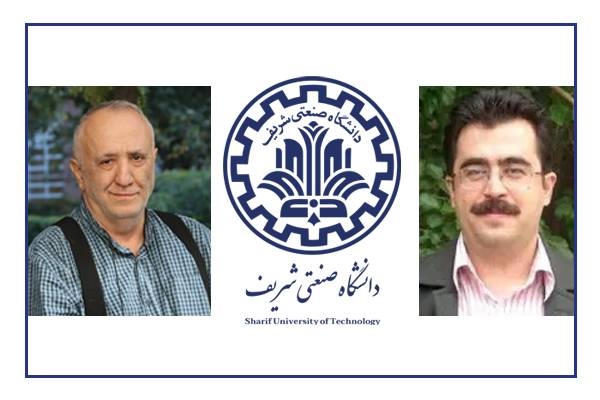
Two physics professors from Sharif University of Technology, Dr. Sohrab Rahvar and Dr. Shahin Rouhani, have published a scientific paper in the esteemed international journal *Monthly Notices of the Royal Astronomical Society Letters*. The research, which presents a novel analysis of the Fermi paradox, has received widespread coverage, including mentions in *Physics World* and a report in the prominent international newspaper *The New York Post*.
Dr. Rahvar and Dr. Rouhani – both faculty members of the university’s Department of Physics – have addressed one of cosmology’s most fundamental questions: the Fermi paradox. This paradox asks why, despite the enormous number of stars and habitable planets in the Milky Way, no sign of intelligent life has ever been observed.
In their paper, the authors note that with an average distance of about one light-year between stars and over a century of radio wave observations, one would expect to have detected at least some signals from nearby civilizations. Yet the “cosmic silence” persists. Furthermore, given the galaxy’s roughly 10-billion-year history, if advanced civilizations had existed in the past, they should have left behind observable traces.
The study reviews common explanations for the Fermi paradox – such as civilizations deliberately hiding or the limitations of interstellar travel – and then offers a different hypothesis. According to this perspective, advanced civilizations may self-destruct before reaching the stage of galactic expansion, due to factors such as environmental degradation, large-scale warfare, or the uncontrolled development of technologies like artificial intelligence.
Based on recent data on the number of habitable planets in the galaxy, the authors introduce the “lifetime of technology-driven civilizations” as a key parameter. They estimate that the maximum lifespan of such civilizations is about 5,000 years – a figure that could explain the enduring cosmic silence. Within this framework, human civilization, which has experienced roughly 200 years of its technological age, remains at the very beginning of this trajectory.
Notably, the paper has drawn attention from international media and the scientific community due to its distinctive perspective and significant implications, and is regarded as a novel attempt to answer one of cosmology’s most complex mysteries.